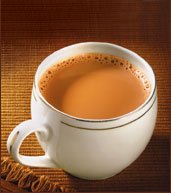
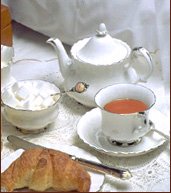
As I have said in my earlier blog entry, the process of tea tasting and blending is an art. This is how it takes place.
The tea to be tasted is placed in boiling water...normally double the amount that we add to our home brew. The temperature of the water depends upon the sensitivities of the leaves. The temperatures could be anywhere from 170 to 212 degrees centigrade.
The tea is steeped for about 3 to 4 minutes in a cup covered with a lid. The lid is taken off and the brew is ready for tasting. Here both taste and aroma matters hence the smell enhances the taste perception.
The taster begins with a big slurp which lowers the temperature and the brew covers the sensitive taste buds. On the buds some oxygen is pumped in to capture more aroma. Then the brew is ejected in a waste cup and the taster then moves to the next.
Before moving to the next all the attributes are noted down. This is a complex process and only expert tea tasters are able to judge the leaf accurately.
Saturday, February 1, 2014


Tea Tasting an Art
Tea tasting is an important process in selecting and blending the finest leaves. The sensory apparatus plays an important role in tasting and discovering the right leaves. On the contemporary times this has come to a level of art. The tasting is done by professional and talented people usually from old house involved in the trade of blending the leaves and selling them in the market.
Albeit the tea leaves are derived from the same plant Camellia Sinensis the differing climatic conditions, soil, topography and way of cultivation results in the leaves acquiring properties that are vastly different whence compared with leaf grown in other regions.
The taste buds play the most important role. The nose and the smelling power is as useful is selecting the aroma. Besides the flavoring characteristics and aroma the color of the leaves, size and the type is also taken into consideration. The process involves liquid teas which are tasted in a row one by one.
After the tasting process over the leaves are carefully mixed to form a blend. The blend subscribes to taste, aroma and cost. Hence the companies try to optimize on cost and flavor depending upon the targeted audience.
Monday, January 13, 2014
Which are the places recommended for tea plantation?
India is, as on day, one of the largest tea producing country of the world. Ironically, more than 70 percent of planted Indian leaf is consumed within the country. A large-scale production was started to grow with the efforts of (in the early 1820s) the British East India Company in Assam, India. Virtually, tea industry of India has drastically grown to develop to multiple brands at International level. It is ranked as one among the technologically sound and well-equipped industries among the best in the World.
Darjeeling and Assam are the major areas involved in producing teas at very high level and supplied to different cities of India. The Tea Board of India is the controlling body to grade production, exportation, certification, and other related facets in the trade in India. To coup up the plantation, there are a few areas in India carrying best factors for cultivation.
Darjeeling: It’s one of India’s populated hill stations and is widely capped by plantations that produce elegant light colored, floral smelling tea. This hill station shares about 25% of Indian production in the form of output. Initially graded as the finest tea growing Estate, at 2,750 meters above sea level by the Englishman it retains its popularity even now. Darjeeling is also known to have one of the highest gardens in the world.
Assam: It is a North-East state of India and is the largest tea producing belt in the country. The state is mostly covered the Valley of Brahmaputra. The malty Assamese leaf incorporates bright color. Jorhat positioned itself in the central portion of the valley is recognized as the "Tea Capital".
Munnar : There are wide lush plantation, in this hill station, by miles after miles. About 1600 meters above sea level, the place is flourishing with the plantations and which generate revenue to State and Central Governments through taxes.
Initially, Tata the largest tea manufacturing company in India owned it, but employees themselves now run it. The TATA Tea Museum amazingly portrays the growth of Munnar Estates, Visitors to the museum can see and enjoy on various stages of processing.
Wayanad : It is actually a lush and a mountainous agricultural area belonging to the city of Kerala. This city is involved in the production of some significant amounts in combination with spices and coffee. Majority of tea plantations are located south of Kalpetta. The Estate here is run by a co-operative of Tribals who work and live within on the estate
Nilgiti Mountains: The mountainous Nilgiri district of Tamil Nadu, in south India, is also renowned for its intensely aromatic and distinctive dark leaf. Tea has been grown there for more than a century back and is the most vital industry in this belt . In fact, Conoor is the most suitable place to discover Nilgiri Leaf. Tea is produced throughout the year in Nilgiri. However, people produce good quality of teas starting from the duration of late November to mid of February.
Assam: It is a North-East state of India and is the largest tea producing belt in the country. The state is mostly covered the Valley of Brahmaputra. The malty Assamese leaf incorporates bright color. Jorhat positioned itself in the central portion of the valley is recognized as the "Tea Capital".
Munnar : There are wide lush plantation, in this hill station, by miles after miles. About 1600 meters above sea level, the place is flourishing with the plantations and which generate revenue to State and Central Governments through taxes.
Initially, Tata the largest tea manufacturing company in India owned it, but employees themselves now run it. The TATA Tea Museum amazingly portrays the growth of Munnar Estates, Visitors to the museum can see and enjoy on various stages of processing.
Wayanad : It is actually a lush and a mountainous agricultural area belonging to the city of Kerala. This city is involved in the production of some significant amounts in combination with spices and coffee. Majority of tea plantations are located south of Kalpetta. The Estate here is run by a co-operative of Tribals who work and live within on the estate
Nilgiti Mountains: The mountainous Nilgiri district of Tamil Nadu, in south India, is also renowned for its intensely aromatic and distinctive dark leaf. Tea has been grown there for more than a century back and is the most vital industry in this belt . In fact, Conoor is the most suitable place to discover Nilgiri Leaf. Tea is produced throughout the year in Nilgiri. However, people produce good quality of teas starting from the duration of late November to mid of February.
Wednesday, January 8, 2014
How is black and green tea better than coffee?
There is a world of hot beverages. An amazing world filled with refreshing hot drinks. But sadly, it has two kings, fighting for their dominance. It may sound hilarious; but such is the story between both. Both have historically been drinks of the nobility. But coffee was known for its intoxicating effects rather than soothing ones, till few years earlier. It was always the bad brother of them and still there are many factors, which make tea much more chosen than the other.
Firstly, tea is economic. While the price of the other has always been soaring high, its price has come down due to its increased farming and globalization making trade much easier. The price is not the only factor in satisfaction, as many will argue. But it is not only about the price. The preparation process is also simpler with no problems of grinding beans, taking the powder, filtering it, refining it further to get to the stage where you can boil it. To tackle this problem coffee makers have always attempted various instant brands to hand over the ready to boil to customers but brewing tea making still stays the simplest process. The variety that coffee breeds offer is also mild. There is no such broad difference of taste in Mexican and Ethiopian produce that are well marketed as the best.
However, talk of tea, the variety does not seem to end at all: black, green, almond and white leaves. Now talking of the taste, original taste of coffee is raw and bitter. Even its lovers cannot have it without adding milk and sugar. Whereas tea is always, ready to go. You can have it with or without sugar or milk. Apart from that, while coffee came from the forest, historically, the other came from the families of kings and rich people. Thus, when the question of class arises, tea comes in as the first choice.
From health point of view, coffee never stands close to its rival. It has more harmful caffeine, and other biochemical enzymes and oxidants, which do more harm to human body than good. On the other is all good things packed in small leaves. It aids in digestive system maintenance. Be it black or green leaf, it is good for heart, cholesterol, and many other human body systems. Overall, black or green leaf should always be the first choice over its rival. As it may intoxicate you for few moments. However, tea gives you pleasure along with the health factors, which are very essential in today’s world. So choose your health, go green, and have it. In conclusion, we should say that people willing to achieve their good health should immediately stop the consumption of coffee and step towards consuming of green and black tea as soon as possible.
Firstly, tea is economic. While the price of the other has always been soaring high, its price has come down due to its increased farming and globalization making trade much easier. The price is not the only factor in satisfaction, as many will argue. But it is not only about the price. The preparation process is also simpler with no problems of grinding beans, taking the powder, filtering it, refining it further to get to the stage where you can boil it. To tackle this problem coffee makers have always attempted various instant brands to hand over the ready to boil to customers but brewing tea making still stays the simplest process. The variety that coffee breeds offer is also mild. There is no such broad difference of taste in Mexican and Ethiopian produce that are well marketed as the best.
However, talk of tea, the variety does not seem to end at all: black, green, almond and white leaves. Now talking of the taste, original taste of coffee is raw and bitter. Even its lovers cannot have it without adding milk and sugar. Whereas tea is always, ready to go. You can have it with or without sugar or milk. Apart from that, while coffee came from the forest, historically, the other came from the families of kings and rich people. Thus, when the question of class arises, tea comes in as the first choice.
From health point of view, coffee never stands close to its rival. It has more harmful caffeine, and other biochemical enzymes and oxidants, which do more harm to human body than good. On the other is all good things packed in small leaves. It aids in digestive system maintenance. Be it black or green leaf, it is good for heart, cholesterol, and many other human body systems. Overall, black or green leaf should always be the first choice over its rival. As it may intoxicate you for few moments. However, tea gives you pleasure along with the health factors, which are very essential in today’s world. So choose your health, go green, and have it. In conclusion, we should say that people willing to achieve their good health should immediately stop the consumption of coffee and step towards consuming of green and black tea as soon as possible.
Friday, December 27, 2013
Which is better coffee or tea?
Ever since man has put his foot on this planet, he has shown his true colors. Man has got everything that he needed. Naturally he was provided with food and drinks. And he has been exploiting the resources of nature because man knows that he will find something or the other which will benefit him. The quest may give rise to something that is new and even more beneficial. And hence that is the way man has been, he has always compared. He has the habit of drawing a comparison between everything that he has got and everything that he thought he would get.
As mentioned above, man has always got what he wanted. When he started living on the planet, the food and the drinks that he required were available naturally. Whether they were the fruits or vegetables, or plain simple water, it was available. And with the advent of time man also discovered fire. And naturally after discovering fire he started doing things that he had never done before. This included finding out new things which already existed on the face of this earth and also use them for the benefits that he would provide themselves with. And in this process man also came across the most important drinks in today’s world, tea and coffee.
It is the most widely consumed drinks in the world though tea has a better hold over the market and its consumers. Tea is an everyday drink and everyone consumes it on a large scale. The hot beverage was made better and better over the period of time.
People in many countries started the same with the coffee bean that they had found and were surely going to get the maximum benefit out of it. And in the process of doing all this, the coffee lovers started asking one question how one is tea better than the other whence both are consumed in such high amounts.
Well arguments like these where which is better and which is not, people don’t usually win. That is because when you will ask a tea lover if he likes it over coffee he will definitely say a yes. Whereas the coffee lovers will say something else and this will be a never ending fight.
The weather too plays an important role in seeing which is consumed more. And what is it that people have been trying to do is switch drinks and trying on something new? With natural anti oxidants and elements that support the immunity system, how is tea better than coffee can be answered but no one really will. At the end what matters now is the preference of the people and not the kind and quality of the product that will be available.
Albeit coffee is consumed in many nations the health benefits of tea are becoming obvious and attracting new customers.
Thursday, December 26, 2013
What are the health benefits of having tea?
Tea, as we all know is the most widely consumed drink across the globe. Everyday there has been a noticeable rise in the consumption of tea by people. When we have a look inside any normal household anywhere around the world, we see that the day starts off by having tea.
People have tea during their breakfast and also before and after. They consume during the long and tiring working hours at the office and also in the middle of regular household chores. So undoubtedly the discovery of this beverage from a consumable plant was the greatest of all times.
We all know that every discovery has been made by chance. Earlier human being inhabiting this planet was a nomad and he did not know what all was available. And finally after finding out that there were quite a number of things which were available naturally that would help him to survive.
And once this process was initiated he also started discovering more and more things that was available all around him. And one is very sure that it was a search of this kind which lead to the discovery of the tea plant and that is how man started consuming it.
But nevertheless the point here remains that from the beginning of time man has done things which he didn’t really intend to do. Later on he went ahead to find out how useful his uselessness was. And that happens to be one of the reasons why now man is also bringing up the question what are the health benefits of having tea?
Because everything that he has found out for himself has turned out to be better than he has expected. These were the hidden benefits which were slowly discovered. Since this has happened all the time men are sure that tea which is a part of their daily lives will also some health benefits. These benefits will give people even more reasons to stay addicted to the drink they already love.
What are the health benefits of having tea is one question that the experts have already begin to answer?
Tea has natural anti oxidants which helps to strengthen the immunity system of the body and thus help the body to fight germs and other harmful elements. Research will lead us to better understanding of this wonder brew. There are many other chemicals waiting to be discovered which help the body. The beverage has been a part of every other household in many countries. It is known for having that refreshing feeling that no other beverage can give. With consumption of tea on a rise, along with its production, no one will deny the above mentioned facts.
People have tea during their breakfast and also before and after. They consume during the long and tiring working hours at the office and also in the middle of regular household chores. So undoubtedly the discovery of this beverage from a consumable plant was the greatest of all times.
We all know that every discovery has been made by chance. Earlier human being inhabiting this planet was a nomad and he did not know what all was available. And finally after finding out that there were quite a number of things which were available naturally that would help him to survive.
And once this process was initiated he also started discovering more and more things that was available all around him. And one is very sure that it was a search of this kind which lead to the discovery of the tea plant and that is how man started consuming it.
But nevertheless the point here remains that from the beginning of time man has done things which he didn’t really intend to do. Later on he went ahead to find out how useful his uselessness was. And that happens to be one of the reasons why now man is also bringing up the question what are the health benefits of having tea?
Because everything that he has found out for himself has turned out to be better than he has expected. These were the hidden benefits which were slowly discovered. Since this has happened all the time men are sure that tea which is a part of their daily lives will also some health benefits. These benefits will give people even more reasons to stay addicted to the drink they already love.
What are the health benefits of having tea is one question that the experts have already begin to answer?
Tea has natural anti oxidants which helps to strengthen the immunity system of the body and thus help the body to fight germs and other harmful elements. Research will lead us to better understanding of this wonder brew. There are many other chemicals waiting to be discovered which help the body. The beverage has been a part of every other household in many countries. It is known for having that refreshing feeling that no other beverage can give. With consumption of tea on a rise, along with its production, no one will deny the above mentioned facts.
Thursday, November 21, 2013
All is good about tea - But
All is good about tea but do not drink it in excess. Excessive tea consumption can lead to acidity hence stomach upset. Albeit there is no evidence about the harmful effects of this brew excessive consumption of any substance is bad.
Large amount of green tea consumption can cause problems hence a doctor should be consulted first. Although no harmful effects of tea consumption have been noted but the high concentration caffeine can cause problems. However green tea or less processed teas are certainly beneficial because of polyphenol which is an excellent antioxidant.
The beneficial chemicals present in the tea leaf percolate down to the brew. These are the agents which regulate human health, prevent disease and make the body resistant to many ills. Researchers attribute various benefits to different types of teas available in the market. The plant in all the cases is the same but its variety differs which brings about change in the flavor. The major difference arises in the way leaf is processed. Less processed leaves retain much of the health beneficial chemicals whilst those grown under different shades of sun retain some chemicals with different health attributes.
Green tea lowers bad cholesterol, helps maintain blood pressure and prevents hardening of arteries on regular consumption. Similarly studies have shown green tea to be beneficial in case of various ailments. With more in depth research evidence that supports curative properties of the tea will emerge.
Health is important yes! But whence the agent that cures offers mouth watering taste, wonderful aroma and cheers what more you need. Consider health benefits as additional benefit.
Wednesday, November 20, 2013
Tea Soirees
In the contemporary era tea is not just a traditional drink as most people believe. It is a fun drink as well and goes well with parties where finger foods and light snacks are served. Not just parties, this wonderful hot beverage is served during recess at events, ceremonies and gatherings of all kinds.
In the past Chinese monk Lu Yu initiated preparation and drinking protocol for this beverage. In Japan, Buddhist Priest Yeisei introduced this brew sometime in 800 AD. The consumption spread far and wide to religious monasteries and royalty. The Japanese Tea Ceremony is often conducted by the geisha who have mastered the art of serving tea.
Tea Gardens
The Portuguese Jesuits introduced tea to the Europeans and subsequently tea gardens opened up in Europe. The Portuguese then introduced tea to the Dutch who introduced it to France and the Baltic Nations. From the prerogative of the rich the tea eventually landed on the platter of the common folks as the production became organized. The garden accorded an opportunity for differing social classes to come together.
Afternoon Tea
Tea entered England in the seventeenth century. The Duchess of Bedford very fond of this hot brew, set unto fashion the consumption in the afternoon. This practice spread among the Nobles fast and quick. This eventually brought in to picture the serving vessels, the kettle, cup and saucer. made of expensive materials like porcelain. The practice became popular among the high class consumers who loved to show off their fancy cutlery.
Modern Tea Rooms and Dances
The tea rooms in US and UK were contained within fine hotels or buildings. These places were frequented by elites during the afternoon for social gatherings.over a cup of tea. Later the rooms became meeting grounds for the young and hence dances came into the picture. The parties over the brew are held on many events like baby showers, weddings and bridal showers.
The modern tea rooms have turned up as lounges with ultra fashionable interiors and classic ambiance. Tea Lounges are new concept floated by Wagh Bakri Tea House and have become very popular with the young crowd all over India.
Wednesday, October 2, 2013
Different tea recipes
Enjoying a cup of tea with the family or friends will obviously give some sort of emotional pleasure to people who really care about season, time and personal moods. Often considered as one of the best hot beverages on this earth, tea can serve countless purposes for an individual who likes to feel and do different from the crowd. Owing to the different versions and recipes of tea, it is much better to choose your best tea format which suits your mood and outdoor climatic variations.
Hot tea will give a window to your tension, sickness and cold weather when it is consumed at perfect time. Strangers will became more familiar and culture barriers will dissolve in this cup of tea. Here, you will learn more deep and comprehensive about the different recipes which are common and healing in nature for the emotional wounds.
Mint tea
Requirements
· Tea – ½ tsp
· Crushed mint leaves – ½ tsp
· Water – 1 cup
Add the crushed mint leaves and tea after bringing water to a boil. Leave the teapot still for just 3 minutes after pouring boiled water on to the leaves. You can serve this after straining the mixture.
Spiced tea
Requirements
· Tea leaves – ¾ tsp
· Boiling water – 1 cup
· Scalded teapot
· Whole cloves – 2
Just put the tea leaves and whole cloves in boiling water and pour some boiling water on to the cloves & leaves in a scalded teapot. Leave the tea still for 3 minutes and serve it after straining.
Orange tea
Requirements
· Water – 2 cups
· Cinnamon – ¼ tsp
· Orange juice – 1 ½ cup
· Grounded cloves – 1/8
· Sugar – ¼ tsp
· Teabags – 2
Add water, sugar, spices and tangy orange juice in a saucepan and bring it to boil. Keep the mixture simmering on a reduce heat flame so that components are dissolved. Add tea bags after removing the saucepan from the heat to steep it for exactly 5 minutes. Tea bags must be strained out before serving the orange tea hot.
Green tea
Requirements
· Green tea leaves (loose) – 1/3 cup
· Black tea leaves (loose) – 2 tsp
· Whole cloves – 6 or powdered cloves – ½ tsp
· Ground cinnamon – ¼ tsp
· Powdered ginger – 1 tsp
· Milk
You are required to blend all the ingredients and put ½ of this mixture into teapot. Add hot water into the mixture and keep an equal amount of milk on the flames. Steep your tea as you wish for the flavor and tea strength after which the tea should be poured in a mug after straining. Also, milk should be added to the mug after which you will have to blend the mixture with the tea.
Here, you are free to store the blended tea mixture for future uses.
Hot tea will give a window to your tension, sickness and cold weather when it is consumed at perfect time. Strangers will became more familiar and culture barriers will dissolve in this cup of tea. Here, you will learn more deep and comprehensive about the different recipes which are common and healing in nature for the emotional wounds.
Mint tea
Requirements
· Tea – ½ tsp
· Crushed mint leaves – ½ tsp
· Water – 1 cup
Add the crushed mint leaves and tea after bringing water to a boil. Leave the teapot still for just 3 minutes after pouring boiled water on to the leaves. You can serve this after straining the mixture.
Spiced tea
Requirements
· Tea leaves – ¾ tsp
· Boiling water – 1 cup
· Scalded teapot
· Whole cloves – 2
Just put the tea leaves and whole cloves in boiling water and pour some boiling water on to the cloves & leaves in a scalded teapot. Leave the tea still for 3 minutes and serve it after straining.
Orange tea
Requirements
· Water – 2 cups
· Cinnamon – ¼ tsp
· Orange juice – 1 ½ cup
· Grounded cloves – 1/8
· Sugar – ¼ tsp
· Teabags – 2
Add water, sugar, spices and tangy orange juice in a saucepan and bring it to boil. Keep the mixture simmering on a reduce heat flame so that components are dissolved. Add tea bags after removing the saucepan from the heat to steep it for exactly 5 minutes. Tea bags must be strained out before serving the orange tea hot.
Green tea
Requirements
· Green tea leaves (loose) – 1/3 cup
· Black tea leaves (loose) – 2 tsp
· Whole cloves – 6 or powdered cloves – ½ tsp
· Ground cinnamon – ¼ tsp
· Powdered ginger – 1 tsp
· Milk
You are required to blend all the ingredients and put ½ of this mixture into teapot. Add hot water into the mixture and keep an equal amount of milk on the flames. Steep your tea as you wish for the flavor and tea strength after which the tea should be poured in a mug after straining. Also, milk should be added to the mug after which you will have to blend the mixture with the tea.
Here, you are free to store the blended tea mixture for future uses.
Monday, September 30, 2013
Types of Assam tea
Tea growing regions of India, Assam has acclaimed its name as the largest production and cultivation house all over the world. This is due to presence of long seasons with favorable growing conditions. Of course, Assam leaf has been a success since a long time. The leaves are often plucked from the plants of camellia sinesis which produces quality black leaf. When a person is about to gather information about the Assam leaf and its types, most of the research will be confined to the malty flavor and bright color of the black tea which is also called popularly as the Breakfast Tea.
Very much close to the borders of Bangladesh and Burma, on the coasts of Brahmaputra river, Assam tea is grown in plenty with organic cultivation which wins trust and credibility of millions of consumers in the entire world.
Harvesting seasons for Assam Tea
• First Flush – Among the two harvesting seasons, the first flush comes first in which late March is the best time to pluck out tea leaves.
• Second Flush – This one is regarded as more sweetened and natural version of the Assam variety, also called as ‘tippy tea’, known for its prized and full body texture. Of course, the texture, flavor, color and aroma of the second flush harvest is quite superior than the first one and even to the Chinese bush.
Famous types of Assam tea
• Black tea – As discussed earlier, this produce has been often termed as the Breakfast Tea and is characterized for its tart, full body texture, beautiful but natural aroma and vigorous body structure. It has long been used as Irish, English and Scottish breakfast tea.
• Green Tea – Although smaller section of tea production is also accounted for the green tea in Assam, it is often known for its taste and distinct flavor & aroma. Here, you will be surprised with the notations and characteristics of local green tea where natural color and brightness of leaves are preserved in the production process.
• Organic tea production – As per the safety standards of cultivation the plants are closely regulated and inspected on scheduled basis so that massive amount of produce is obtained, with rich taste and realistic aroma. You will never find here the use of chemical pesticides, fertilizers and any other method to contain soil moisture because all of these are achieved naturally.
Tea cultivation season, regions and time zone for Assam
Against the common time zone preferred in Darjeeling and Sri Lanka, Assam cultivation period is often known as the Tea Garden Time, Bagantime. Of course, the Assam tea is grown in the lowlands area, Brahmaputra Valley as of opposite to the highland cultivation in Nilgiri and Darjeeling Regions. The nutrients and soil texture is harnessed at the maximum which gives boost the quality and quantity of tea production in Assam.
Very much close to the borders of Bangladesh and Burma, on the coasts of Brahmaputra river, Assam tea is grown in plenty with organic cultivation which wins trust and credibility of millions of consumers in the entire world.
Harvesting seasons for Assam Tea
• First Flush – Among the two harvesting seasons, the first flush comes first in which late March is the best time to pluck out tea leaves.
• Second Flush – This one is regarded as more sweetened and natural version of the Assam variety, also called as ‘tippy tea’, known for its prized and full body texture. Of course, the texture, flavor, color and aroma of the second flush harvest is quite superior than the first one and even to the Chinese bush.
Famous types of Assam tea
• Black tea – As discussed earlier, this produce has been often termed as the Breakfast Tea and is characterized for its tart, full body texture, beautiful but natural aroma and vigorous body structure. It has long been used as Irish, English and Scottish breakfast tea.
• Green Tea – Although smaller section of tea production is also accounted for the green tea in Assam, it is often known for its taste and distinct flavor & aroma. Here, you will be surprised with the notations and characteristics of local green tea where natural color and brightness of leaves are preserved in the production process.
• Organic tea production – As per the safety standards of cultivation the plants are closely regulated and inspected on scheduled basis so that massive amount of produce is obtained, with rich taste and realistic aroma. You will never find here the use of chemical pesticides, fertilizers and any other method to contain soil moisture because all of these are achieved naturally.
Tea cultivation season, regions and time zone for Assam
Against the common time zone preferred in Darjeeling and Sri Lanka, Assam cultivation period is often known as the Tea Garden Time, Bagantime. Of course, the Assam tea is grown in the lowlands area, Brahmaputra Valley as of opposite to the highland cultivation in Nilgiri and Darjeeling Regions. The nutrients and soil texture is harnessed at the maximum which gives boost the quality and quantity of tea production in Assam.
Subscribe to:
Posts (Atom)