Wednesday, May 20, 2015

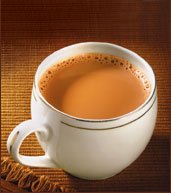
Chai! How it began in India


The English popularized tea as a hot beverage but it was the Indians who accorded it a mass following.  In fact they embraced it with so much fervor and zeal that its consumption in the country surpasses its production. A large quantity of leaf is imported from countries like Sri Lanka, Kenya and so in.

Its relation building and bonding mechanism out does the drink mates in the bar. Many a deals are sealed over a cup of tea hot steaming one at that. In India it is customary to serve chai to official visitors of fellow business men. 

In earlier times this beverage was considered as a medicine in the subcontinent. But as the popularity increased the leaf turned into a beverage unsurpassed by any.   I remember elders telling me of popularity of milk and jelebies as customary offerings in stalls in India. At that time tea was not in the reckoning at all. 

It was the British who made the brew popular in the country. Themselves fond of this hot beverage they promoted its cultivation in India and developed a vast market as well. Indian Tea Association owned by the  British succeeded in conversion of masses into avid tea drinkers during the nineteen hundred. 

But the real boost for tea consumption came about during the  World War I. The  Tea Campaign  initiated stalls at factories, coal mines, and  mills. This was eventually followed by the tea canteens.
Railways was another booster the Tea Association equipped small contractors with kettles and cups and packets of tea. In the beginning these vendors worked in Punjab, Northwest Provinces and Bengal railway stations. 

The vendors in spite of careful guidance the masters paid no heed and made the hot beverage their own way. This is how chai came into being added with lot of milk and sugar and sometimes jaggery.   Till this day the loud call of the vendors Chai!Garam Chai can be heard at each and every railway station.  

The next step was to set up stalls in large towns which was resisted by small vendors who brought about a new innovation. They added flavors and spices in order to out bid the larger stalls.

It was at Kanpur that spice tea came into being with the add mixture consisting of cinnamon, cardamom, cloves etc. This tool place in a Kanpur Mill canteen. Much popular all over the World this was later called the masala chai.         

Monday, January 19, 2015

Lets T it up - Party Guys

Sometimes I think tea companies should come up with some unique blends of this beverage for parties. The beverage could be hot and cold, a mix of dazzling cocktails with floral notes and fruity punch. Masala Chai could fit in the trendy parties with proper blending.

Tea trending is what can get rid of obnoxious booze/drug parties in case of young lot. I love drinks but would like to see it being balanced by lot of tea. Special snacks for these parties would be another good idea - foods that gel well with the brew.  

All this requires an innovative approach. One good thing that is happening in India is the success of tea lounges. These could well substitute for bars as hangouts and their utility as short business rendezvous is amazing.    

Discotheques and hookah bars serving this magic brew would also be welcome. Without alcohol you dance with the right steps. 

Toa Chalo Chai Ho Jaye!
Gujarat in India leads in offering tea to clients, business partners and relatives. The chai in plate concept runs wide all over this state. This limits the brew intake to the right levels. 

Like in Ahmadabad there are many City sit outs, chai carts and tiny shops that offer hang outs for the young collegians. These are good for distracting people from the lure of the hard liquor. Hic!      

Remember T augurs health - Booze buggers health and wealth. Hic! 

Friday, January 2, 2015

Expressing your taste through various popular tea recipes – give your tongue a unique flavor


Although the basic ingredients for making tasteful and vibrant tea will remain the same comprising of milk, sugar and leaves but what brings the difference is the process of preparing the brew. You might across different tastes of tea cup while visiting to your friend’s or relative’s home or even the nearby restaurant but taste will always differ. Yes, this is because of the differences in the preparation techniques.

Typical and primary recipe

You may like to prepare a cup of tea by adding some fresh green leaves into boiling water to make a extract which can be directly consumed. This is the most primary and typical way of preparing the brew, running since the oldest memorable time period. However, the taste and flavor may change colors owing to variations used.

Making dust tea

The basic concept which remains intact with making the hot beverage with the help of processed tea dust or leaves is that they will release the chemicals and other ingredients when they are brought in touch with the hot milk or water. Of course, milk will give a different taste, color and flavor to the liquid used and you can consume the extract in various ways.

Traditions of milk and sugar

Various people would like to add different proportions of sugar and milk so that classical touch can be given. No doubt, some of the people may not like to add milk rather they make tea with refined sugar only.

Boiling water and tea dust or leaves

At home, the brew is prepared with the help of tea dust or leaves poured into boiling water which is filtered to a clean cup or jar. After this, you can add some pure milk and appropriate amount of sugar to give the mixture a definite color, flavor and strength. However, when you add raw leaves into boiling water, you will have to boil it for some extra time.

In adding to the above mentioned procedures, dust can be directly mixed to the boiling milk after which sugar is added. Tea dust mixed here should be lesser in quantity as milk will try to absorb all the ingredients so that it tastes much better.

Retail chai shops recipes

While reaching at the nearby chai shops and canteens, you will find the tea being made in larger volumes and quantity which may be sufficient for 50-100 people falling in a group. Of course, the process of making tea comprising of heat source, pans and blends will differ so that each of them gives a unique flavor to your tongue. However, star hotels will prepare tea in smaller amount tailored to the taste and interest of the guest!

Tuesday, December 30, 2014

Interesting and amazing history progression of tea from China to different world countries

Modern Tea Lounge
Green Leaf

The Brew

Sakura
When it comes to exploring the interesting history and culture of different countries, you will find an excellent amalgamation tea drinking habits. You will realize the modern necessity of a single cup of tea. Yes,this is all about the fascinating story of tea marketing, distribution and recipe variation.This has really brought tea at the extreme corner of popularity in everyone’s life.

Right from the beginning in China, it traveled to almost every country in this world. Going through Britain, America, Japan and India the flavorful leaf  tells a tale of victory over all other conventional beverages.

Discovery

There are several stories and legends about the discovery and first sip of  this wonder brew taken by human race. The origin is indicated to Chinese Emperor, right back to 2737 BC when it was consumed by locals because of immense medicinal and herbal freshness. The plantation and distribution passed through different dynasties in China such as Zhou, Han and Tang. This is the era whence drinking this hot beverage assumed a more common form percolating down to the lowest sections of society. Of course, the beverage was exposed much to Chinese, Indian and Japanese residents as it gained early popularity. This was acceptance  as beverage and not a medicinal concoction any more.

In China and Japan the green leaf gained thrust with the creation of wide ranging varieties.Culture and trends also played a major role. In India the black leaf from Assam and Darjeeling Estates became highly popular.   

Tea Journey to England

Since tea was then very common and limited to the Chinese regions, it was possibly in the seventeenth century when it reached England. This was in the kingship session of Charles II. Of course, tea was assumed to be a royal drink at that time. It was the power and virtue of East India Company which marketed tea to  nations under its belt. However, the leaf was very expensive then and the British Government imposed hefty taxes on the consumption. This augured smuggling and black marketing which the government found difficult to control.
American Tea History

With the start of eighteenth century, special tanks, ships and containers were made to export huge quantity of leaf from China to European nations like UK. The famous Boston tea party made this leaf a symbol of protest. The destruction of leaf was done by those favoring independence from British rule in America .  

Why people love tea?

It was not the traditional trend of  tea culture which attracted people at large but also the health benefits. The brew contained  minerals and vitamins and antioxidants.  These supplied the body with vital elements initiating a cheerful countenance and warm feel.  The packaging created a transportation flexibility that lead to development of a wide range of leaves like green, white or black.

Thursday, December 18, 2014

Tea Types: The Healing Touch

Cool Tea Pic: Wagh Bakri
The antioxidants in green tea help us inside-out. We tend to glow more and get rid of dark circles around the eye. We even feel more relaxed on the outside while the cholesterol levels, cardiac systems and the organs are all getting a touch of healing on the inside! Green tea can be combined with other healthy beverages or food to add a twist in the flavor and also treat common illnesses naturally.

Know Tea Types

Genmaicha is Japan’s famous combination of green tea and toasted or roasted brown rice. ‘Genmai’ means roasted brown rice. It is commonly referred to as ‘popcorn tea’ because of the quantity of puffed rice it contains. There is no corn in it at all.

Processing and serving
The flavor of the Genmaicha tea depends on the ratio of the green tea and brown rice. For better aroma the brown rice content is higher. About a tablespoon of brown rice is roasted dry making sure each grain gets roasted. It is then kept aside to cool. The tea is carefully infused with hot almost-boiling water for just 30 seconds. About 5g of tea leaves is put in about 1/10th of a liter of hot water. Then it is poured into a cup through a tea strainer that already has freshly roasted brown rice in it. The strainer is kept in the cup for about 2 minutes to make a strong Genmaicha.

Benefits

Genmaicha has calming properties due to which it is recommended to have a cup when you return home after a hectic day or an hour before going to bed to help with sleeping disorders. It is also recommended after a heavy meal because it helps in quick digestion. It is also rich in vitamin B1 and has a very low caffeine content.

Jasmine Tea

The flowers of jasmine that is usually planted to add to the beauty of the garden can be put in green tea to get a sweet aroma. It is also said to double the anti-carcinogenic properties of regular green tea.

Processing and serving

The buds are plucked early in the morning and stored in a cool place. They start blooming in the evening. The flowers are the green tea are made to ‘mate’ for four hours. Longer the ‘mating’ time better the grade of the tea. By the time the tea is served the flowers are dry and devoid of the moisture and aroma but they are allowed to sit in the cup anyway to add to the aesthetic appeal.

Kukicha Tea

This is also called twig tea because it’s made from twigs and stalks. It is made by adding the stalks and stems of Camellia and has a creamy, nutty flavor.

Processing and serving

The stalks and stems of Camellia are steeped in water at 75 degree C for two minutes and the green tea powder is added to it and steeped for another 45 seconds or so. One or two stalks are left in the cup to add to the beauty.

Tea Basics: What’s in a Blend?

Most tea retailers create their own blend to make their tea taste and smell unique so that a particular group of target customers are hooked to only that variety of tea. However, there are no maxims regarding the right blend or anything. There are some regular blends and you can make your own blend by mixing two or three of these regular blends to suit your taste.

Here are some blends that you can take a look at to get an idea about the usual blends. You can try some of them and then make your own by mixing them or adding a few herbs or spices of your choice to experiment.

Earl Gray

This is only black tea with Bergamot citrus oil added for the aroma. The light citrus flavor is refreshing and strong and you can make it to smooth the aroma if you want with a few jasmine or holy basil leaves.

English Breakfast

Yes, this is the name of a blend of tea or to be precise, a Chinese Keemun famous in India, Africa and Ceylon. This is one of the commonest types of tea.

Irish Breakfast

Similar to the English breakfast, the Irish breakfast is a blend grown in Assam and Ceylon in large quantities. It is dark in color and malty in texture.

Afternoon Blend

This is a light tea unlike the English and Irish breakfast. The blend is made from the best Darjeeling tea, Oolong tea and light Ceylon tea. Since it promotes digestion it is recommended after heavy meals which we usually tend to eat during lunch and hence the name.

Russian Style


This is black tea or oolong tea teamed with Lapsang Souchong for the smoky effect. The blend is generally made by mixing Keemun tea, Assam tea and green tea from China. Some other blends include different types of black tea only.

Spiced Tea

Spices like cloves, cardamom, anise and cinnamon are added to superior quality Ceylon tea and your spiced tea blend is ready. The base is black tea because black tea has a strong aroma base to be able to stand out even in the flavor of these spices. To add to the refreshing property dried orange or lemon peel can be grated into the tea and left for some time before straining and consuming.

Herbal Tea

Herbal tea, just like spiced tea is not a blend of tea in itself but tea with added herbs for the aroma and health factors. Green tea is preferred over black tea in the case of herbal tea but you can use either or even a blend of green and black tea. You can add peppermint, holy basil, spearmint and other light herbs to make the blend of your choice.

Thursday, December 11, 2014

Wagh Bakri Signature Lounge Inauguration Photos

The signature Tea lounge by Wagh Bakri Group has been inaugurated as of today. Find images:

Paridhi Sharma At Inauguration

Directors

The Tea Lounge Inauguration at Ahmedabad

Tea has plethora of uses

It is excellent for preventing dizziness whence standing up. It use with ginger is well known for clearing bad throats and preventing cold subsequently.  

Bizarre but true the leaf acts as a meat tenderizer and to produce cheese and boiled eggs and with its flavor. Using tea leaves after the brewing process as fertilizers and to enrich the compost is hugely beneficial. Even if you are not using the leaves for these purposes you should rather throw used leaves into the potted plants of your garden. Being biodegradable the leaves act as fertilizers and enrich the soil as well. These are most popularly used in rose gardens.    

Cleaning rugs carpets and cloths is possible with tea leaves after they have been used. The leaves wipe out the greasy imprints from car glasses, window panes and what not. 

The leaves prove effective for de-stinking refrigerators, toilets, body parts etc. They are used for treating acne, blisters, scars, and so on. The brew is also a mouth freshener and  removes bad odors whence drunk in the morning or after meals.Warm tea bags whence used as patches relieve eye sore and refresh sight, 

The leaves have also been used to create strong paints used by artists as well as dyes for delicate fabrics. It is a fragrant leaf with healthy chemicals that sets your morning roaring o why not be curious and discover more uses besdies flavors.

Worlds Best Green Teas

About Green Tea Taste

The dull grassy and herbal taste needs to be acquired. The brew is first introduced as health beneficial or weight loss tea but later a taste is acquired making it habitual. Among the hundreds of varieties of this leaf few are on the list of top sellers.  

Brewing: While brewing the tea mild temperatures have to be maintained such that the aroma and taste is not lost. Over brewing may also result in bitter taste that can mar the delicate flavor of the green leaves.    

Some of the major green leaf blenders in India are Tata Tetley, Wagh Bakri, Organic India, Brooke Bond and Eco Valley. Some the finest blends popular across the globe are:  

Dragon Well Green Leaf from Zhejiang Region of Chinese Mainland

Green Tea from Mount Fuji Japan

Gunpowder from Numi Organic

Tropical Orange Leaf by Shangri La

Blackberry Mojito by Teevana

These are some of the finest leaves available online from the source. 

Wednesday, December 10, 2014

Ahmedabad Tea Lounge: Grand Opening

Wagh Barki Tea Lounge
A Place to Connect in Ahmedabad

The Wagh Bakri Tea Lounge is set to open on this day 11/12/2014 at posh locality in Ahmadabad in Gujarat.  The company is a pioneer in India for promoting the tea lounge concept thanks to it dynamic young directors like Shri Parag Desai.

Earlier the company had set up lounges in New Delhi, Aurangbad and Mumbai for creating and entertaining hub that is unique. The places serve wide variety of  hot beverages brewed using the finest blends that WB Tea House is famous for all over the World. Keeping the grand success in mind, the company is set to establish more such lounges in other cities.