Saturday, May 10, 2008

Popular green teas

Green tea beverage is made from leaves of Camellia sinensis which under minimal oxidation when being processed. The origin of green tea leaf is from China and spread to India and other tea drinking countries.

Green tea leaf is becoming largely popular in the Western countries as well especially to countries which have started consuming black variety. Like black variety that of green tea have come into picture. One of the finest quality green leaf comes from the Darjeeling tea estates in India.The difference arises from region, climate, soil and method of cultivation and processing. The rising popularity is also due to the health benefits it offers especially organic leaf which is green tea grown without using chemicals.

In China Zhejiang is home to most famous of teas. Xi Hu Longjing is pan friend and has a flat appearance. Other tea varieties Hui Ming, Long Ding, Hua Ding, Zucha and Qing Ding.

Japanese Green Leaf

Gokuru is a steamed tea from Japan. Most popular green brew in Japan as Genmaicha. It was brought to Japan by a Buddhist priest from China.

Green Tea from Ceylon is not so popular and does not find a worldwide market.

Thursday, May 8, 2008

Tea: How to enjoy best

If tea tasting and blending are an art so is the way it is prepared. Tea preparation and serving is something perhaps a regular party giver or tea ceremony holder would hold expertise in. It is a hosts delight to serve this hot brew to his or her esteemed guests.

Tea preparation begins with choosing the leaf. In informal circumstances exquisite tea varieties are not a must since cost matters. Taking the weather into consideration strong, dark tea with astringent flavor suits the best, where as in hot weather brew with subtle aroma and sweet taste is more befitting. In the case of former black leaf should be used where as in the case of latter green leaf is apt.

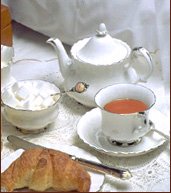
When serving tea in informal occasions, porcelain cups and saucers should be used. The cups brimming with hot beverage should be served on a plain tray along with biscuits and other light snacks.

In case of formal occasions as tea parties and ceremonies, the finest variety of leaf with strong aroma and subtle muscatel taste should be used. A fine example is Darjeeling black and green tea leaf. Premium variety of Assam black leaf also befits the occasion.

The recipe should always be plain and simple with or without milk. Spices and condiments should never be added as they spoil the original flavor of the tea leaf. The connoisseurs would prefer the drink this way.

Special care should be taken whence preparing the brew. The water should be boiled and then allowed to simmer. The leaves should be added during this phase and should be allowed to soak in for some time. As soon as the strong aroma of the leaves starts to emanate from the steaming brew the mixture should be strained.

This recipe gives fine tasting black tea brew. If milk has to be added then it should be done whence serving.

Whence serving exquisitely designed bone china or silver cups and saucers should be used along with kettles of same quality that hold the black leaf and milk. Specially designed containers should be used to hold sugar cubes. The black tea should be gently poured into the cups. Milk should be poured too for those who wish to have it that way. Along with tea, light sandwiches, snacks and biscuits find good accompaniments.

Sunday, April 20, 2008

Tea tasting

The process of selecting tea leaves for blending is referred to as tasting. Tea tasting is an art which is by the virtue of being associated with industry as a blender. The primary senses responsible for tasting are the sense of taste, your taste buds of the tongue and the sense of smell or odor dependent upon your olfactory organs or the nose.

The tea leaves have three basic flavor profiles:
Foreground profile or the top note
Middle profile or the body note
Background flavor or the base note.

These three profiles characterize a leaf flavor and aroma. The aromatic and volatile compounds in the tea leaf are responsible for our taste and odor perception.

Apart from this the physical aspects and look and feel of the tea leaf also comes into the picture.
Mouth Feel for dryness and slipperiness.
Temperature for relative volatility of the constituents.

Method

The tea is prepared in a lidded container such that the volatile components are not freed but infused in the brew. The expert taster should frequently wash hands, rinse his or her mouth with pure water or eat bland biscuit etc. Sometime long hours would be needed to get rid of desensitization that has crept in after hours of tasting.

All the tea tasting happens in milliseconds.

In the tea flavor release process, first the solubility of the leaf in saliva takes place and the solubility components or the aromatic constituents are perceived by the taste buds. The volatile constituents then evaporate and reach the nerve endings in the olfactory region of the nasal cavity.

As stated tea tasting is an expert’s job and lot of hard work is required to understand the taste and aroma of leaves and create a master blend.

Friday, March 14, 2008

Indian chai tea

Although tea is not unique to India since it is drunk all over the world now..well almost. Indian chai comes in mind boggling flavors and is sold at roadside dhaba to five star tea rooms. But the ubiquitous chai wala justifies this name of the hot beverage. The recipe and method of making the tea beverage differs from person to person and place to place.

Tea makers have devised their on concoction of masalas or spices to add as flavoring. Such teas are known as masala chai in India and spice tea all over the world.

The masala chai is added to the black tea leaf mostly and rarely to the green tea beverage. But aromatic herbs as spearmint, mint and also lime is added to both black and green tea beverages. Even chocolate and vanilla flavors are added to the hot beverage but very rarely in India.

It is the simple recipe that finds popularity with the chai walas though the tea leaf may be often of different variety and brands.

Wednesday, February 27, 2008

Enjoying Green Tea

Best way green tea can be had is plain dark with little sugar and a dash of lime. The secret of enjoying green tea is to buy the right kind of leaf. I like Darjeeling green leaf the best though Darjeeling black leaf is no less aromatic and flavorful.

Darjeeling leaves carry a unique aroma and flavor though the aroma is strong and fills the whole room the flavor is subtle and tends to be on the sweeter side unlike that of the black teas from Assam which are a bit bitter in taste.

Another way to enjoy green tea is with milk and sugar and add some spices like ginger and cardamom. For more exotic taste add cinnamon powder. I find lemon grass tea yuck! But it has immense health benefits especially when you are down with cold and a bad throat.

Some people add garam masala or a mixture of spices to green tea in India but I believe this concoction suits the black variety more than it suits the green tea beverage. Never the less spice tea is common in India and who like to add what is his or her business after it is your cup of tea or Chai as they call it in India.

Thursday, December 13, 2007

Making out good tea from spoiled Tea

The state of tea can be made out by the aroma. A tea connoisseur will easily make out whether the brew is spoiled or fresh from the characteristic aroma of dry leaf but it will be difficult for an amateur to make out the rancidity in leaf in the early stages.

The other way is to pour tea infusion in the pot and inhale over it immediately if the rising aroma is pleasant sweet fruity or flowery...in short it smells nice the leaf is fresh and good. On the other hand a smoky burned aroma like that of everything stale means the tea is spoiled.

Sometimes stale leaves will exude no aroma at all this is a sure shot sign that you have purchased stale leaves which have been lying in store well past its storage period.

Different teas have different store life as green tea and white tea can withstand low period of storage where as black leaf can be stored for a considerable longer period. Therefore in early history black leaf was a preferred export to regions that where far off and where tea was not cultivated at all.

The aroma changes in every stage from freshly prepared drink to when it has slightly cooled and much after that. With practice one should be able to discern all the characteristic of tea leaf…the one which he regularly consumes.

Saturday, October 13, 2007

Green tea or black tea?

What do you do when you drink hot beverage for taste and health both? This is if you are drinking black tea and want to switch over to green for health benefits. Well both are healthy and both are fragrant and full of flavor. The difference is green leaf imparts a muscatel taste and light flavor to your taste buds whereas black leaf delivers strong aromatic taste and aroma. If you are hooked on to any one type of flavor you are not going to enjoy the other…well most likely.

There is a clear cut answer do what I do. Mix both i.e. more of green and little less of black tea. You can change proportion according to your preference in your recipe as per the taste and flavor you prefer. Believe me the result is wonderful …and the advantage …you are getting health benefit from both type of leaves.

Green tea is rich in antioxidants and poly phenols while black tea has many other healthy chemicals that help fight disease. The different arises from the way both are processed which is differently. Thus both contain healthy chemicals in different proportion and of different types to put it in a layman’s language.

Buy green leaf and black leaf as loose or dip both black tea bag and green tea bags if you use this packing for making the brew.

Enjoy the best of the both tea worlds.

Tuesday, September 18, 2007

Green Tea Recipe

If you add milk and sugar to a green tea recipe you are making tea the India way. Indians almost always drink organic green tea with milk and sugar. Some add cinnamon, cardamom and often ginger shreds. These are the three most popular extracts that tea lovers in India add to tea recipe.

Tea is an inseparable part of food consumption in Indian families and the above recipe is standard household way of consuming chai tea. But there are families who are specialist tea drinkers and they have evolved tea recipes of their own of which you come know only when you visit their homes. I have had experience of drinking tea in one home the taste of which I admired like anything. Only secret that I could extract of them was that they had added cinnamon powder in the tea brew. But I knew there were much more masalas in the tea that I was relishing sip after sip.

Black tea without milk may be consumed in some remote inaccessible cold regions of Indian sub continent. In spite of the basic habit of tea drinking in India. There are subtle nuances in the tea flavor depending upon tea blend and variations in taste of milk and even sugar. Hence tea in India is as diverse as India itself is. And for each family that comes up with its own unique recipe one should respect and regard their ingenuity and asking for their recipe is inappropriate, until unless they reveal it to you.

Just learn to sip that wonderful liqueur man!

Tuesday, September 11, 2007

Premium Tea - Costs

Expensive teas or...

The cost of the tea depends much upon where and how it is grown and the process after wards the plucking is over.

The tea taste and flavor depends upon the sub species of the bush Camellia sinensis that the leaf comes from. Some sub species are renowned for their quality and are generally sold as premium teas.

The region where tea comes from is also responsible. Like tea leaf from the Darjeeling district in Indian state of West Bengal is highly aromatic and superior in taste and flavor to most of the tea growing regions. Some variety of teas from Darjeeling are highly expensive being more popular in English Tea Rooms. The elevation of the tea grwoing regions also help grow premium varieties of tea leaf.

The weather and annual climate also plays a key role. Other factors are the age of tea bush and the selection of leaves that are plucked for the blend.

The methodology used by tea estates for plucking, rolling, twisting and cutting the tea leaf also plays an important role.

The oxidation process gives rise to green, black and white tea leaves. The green tea leaf is less oxidized than black tea hence retains beneficial enzymes and antioxidants more than the black tea. The white tea though not so much popular is grown in total shade devoid of sunlight, hence the name white tea as it contains less pigments. The tea leaves which we use to brew the hot cup of tea is usually a master blend of many varieties of tea leaf. The better the blending the better the taste and flavor.

Friday, August 24, 2007

Tea

Popularity of tea all over the world is growing day by day not only for its health benefits but also for the splendid taste that coffee tea carries. The art of tea drinking is engraved in many recipes that are popular all over the world.

The English introduced hot tea beverage in India although the tea plant was native to India, China and many Asian countries। The way tea is consumed in India, China and Japan varies from the way tea drink is consumed in English tea rooms and garden parties।

The hot tea recipe is often simple if you are not adding any exotic spices to the mix. In India ground spices as cardamom, cinnamon and shreds of ginger are more popular additives to the tea recipe when other masalas or spices are added it becomes spice tea or masala chai as is popular in India.

The addition of mint or spearmint, chamomile and other flavors may appeal to a particular segment of tea lovers but in my opinion black and green tea are best had with milk and sugar or for black tea lovers without milk.

Spices or other tea extracts or additives have their own benefits, but the latter rules. For the newbie tea drink lover extra flavoring helps but as he specializes in the art of making tea he develops a taste for tea as brewed plain to get the full benefit of tea leaf.